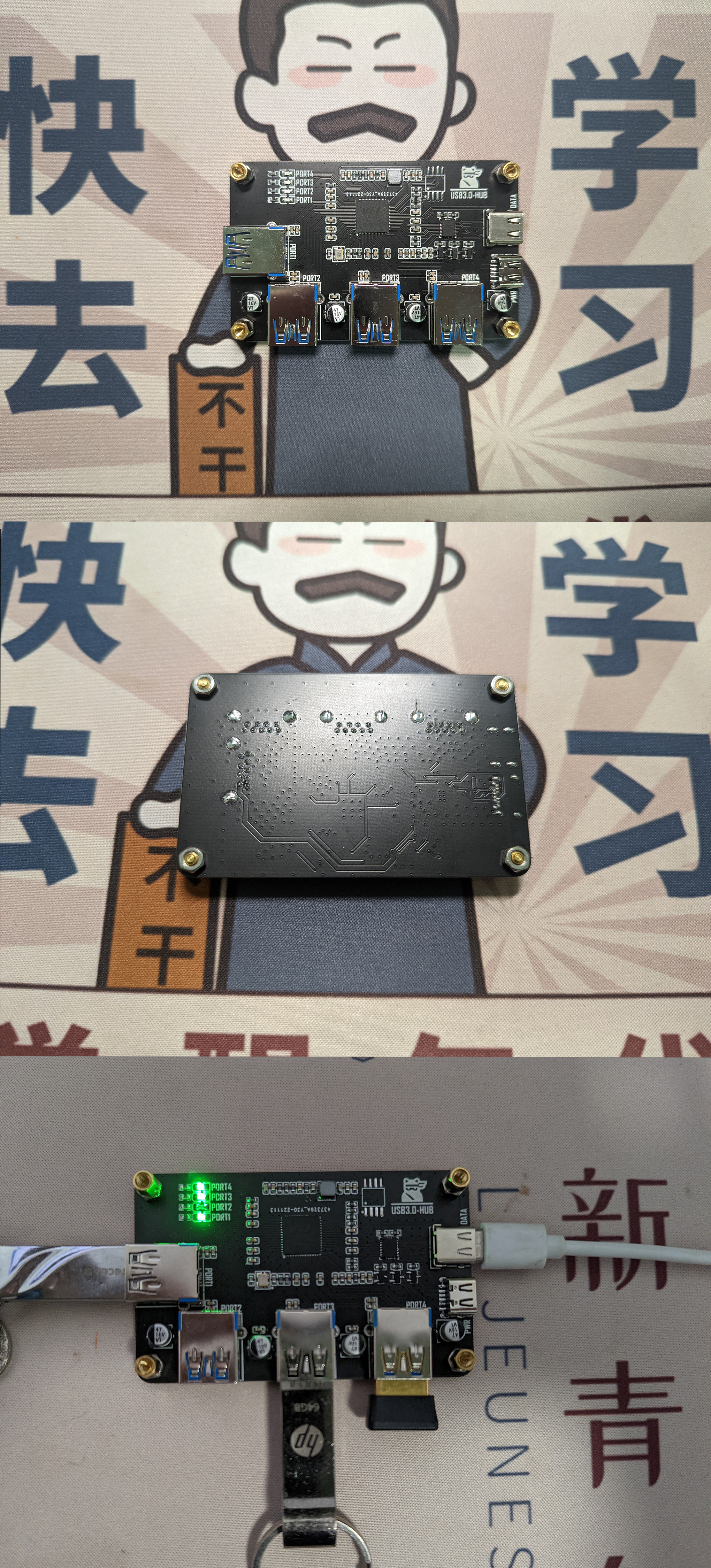
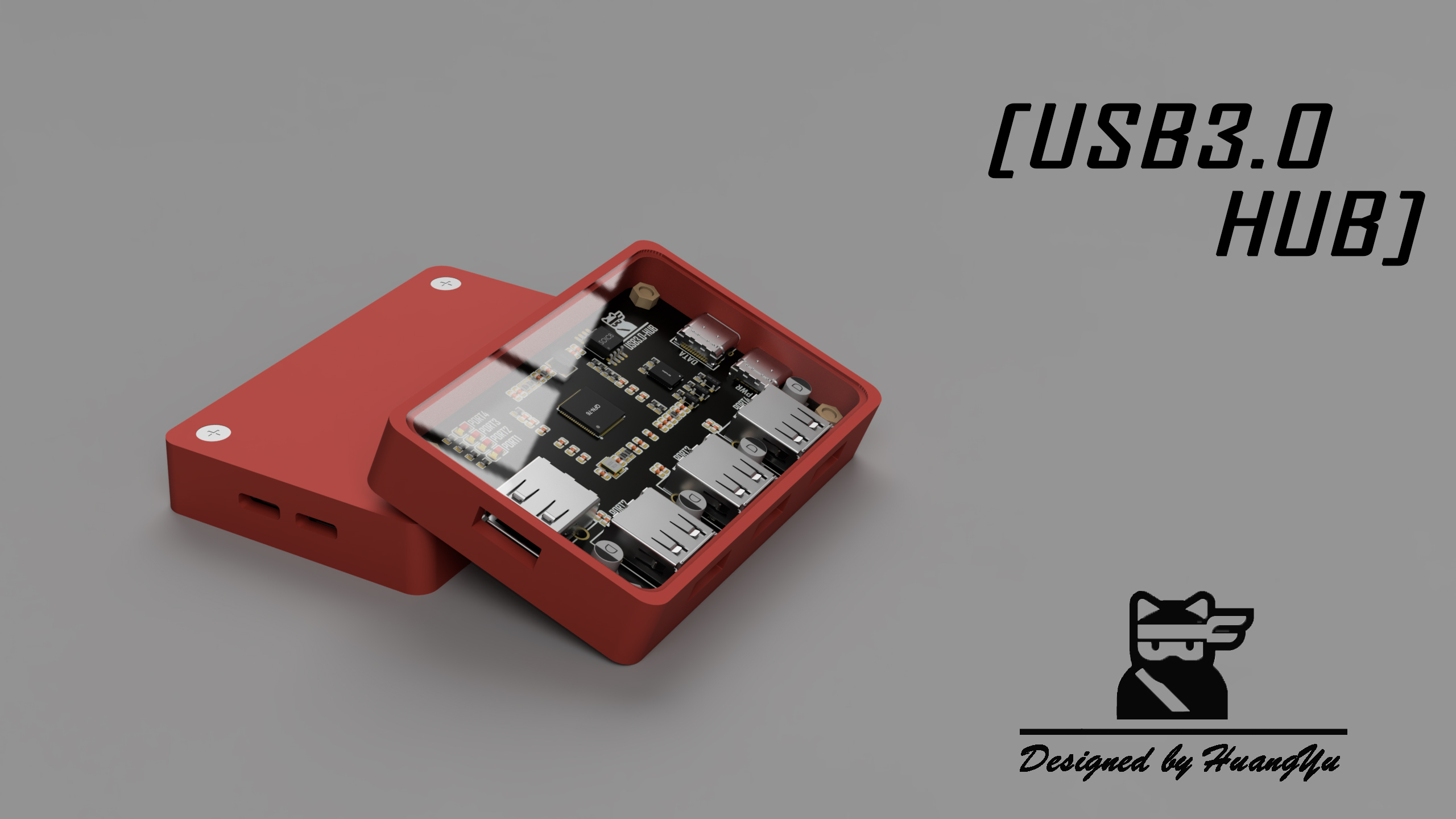
Design of USB 3.0-HUB Based on VL813
2026-09-22 02:00:00 | pcba-mkr
VER 1.2 version uploaded on August 27, 2022. The following are the important points:
1. This version has verified the casing. The casing is now available.
2. The circuit of the previous version has been slightly optimized. The power supply part has been improved and eFUSE has been added. Other parts have hardly been changed. This can be regarded as fixing the power supply bugs of the previous version.
3. This version has been verified and tested through prototyping. However, it is only tested for functions. The speed before and after connecting this HUB (the rate tested when four ports of the HUB are connected to SSD hard drives is basically the same as the rate when directly inserting SSD into the computer) has been compared. If you have the energy, you can do other tests to see if there are any other problems.
The subsequent design should not be updated...
The latest version of the HUB, referred to as VER 1.2, has been officially released and is now available for deployment. This update follows a comprehensive verification process that includes both functional testing and physical casing validation. The casing has been finalized and is now ready for integration, ensuring improved durability and aesthetic consistency with the intended design. In terms of internal circuitry, minor optimizations have been implemented based on feedback and performance analysis from the previous version. These adjustments primarily focus on enhancing the power supply section, which was identified as a critical area requiring improvement. A key addition in this revision is the integration of an eFUSE component, which significantly improves the system’s stability and safety by preventing potential overcurrent or short-circuit damage. Other components and functionalities have remained largely unchanged, indicating that this version is primarily a refinement rather than a complete redesign. The modifications made in VER 1.2 are aimed at addressing known issues related to power management and reliability. While the core functionality remains consistent with prior versions, the enhanced power supply architecture ensures more stable operation under varying load conditions. This improvement is particularly important when the HUB is used in conjunction with high-performance storage devices such as SSDs, where power fluctuations can impact data transfer rates and overall performance. The HUB has undergone prototyping and basic functional testing, confirming that it operates as expected under standard usage scenarios. Specifically, performance comparisons were conducted between direct SSD connections and multi-port SSD configurations through the HUB. The results showed that the data transfer rates in both cases were comparable, indicating that the HUB does not introduce significant bottlenecks in terms of speed or efficiency. While these tests confirm the basic functionality and performance, further testing is recommended for users who require more rigorous validation. Additional stress tests, long-term reliability assessments, and compatibility checks with a broader range of devices may help identify any latent issues. However, given the current scope of testing, the HUB meets the established performance benchmarks and is deemed suitable for general use. It is important to note that no major design changes are planned for future iterations. This implies that the current version represents a stable and well-verified state of the product. Any subsequent development will be focused on incremental improvements rather than structural overhauls, ensuring continued reliability and user confidence. In summary, VER 1.2 represents a refined and more robust version of the HUB, with confirmed improvements in power supply stability and safety features. The design has been validated through prototyping and functional testing, and it performs reliably under typical operating conditions. For users seeking a dependable and high-performing HUB solution, this version offers a solid foundation for implementation. Further testing is encouraged for advanced applications, but the current release is considered production-ready.